Prediction markets have become de facto sportsbooks, but oversight has not caught up: research
The brief
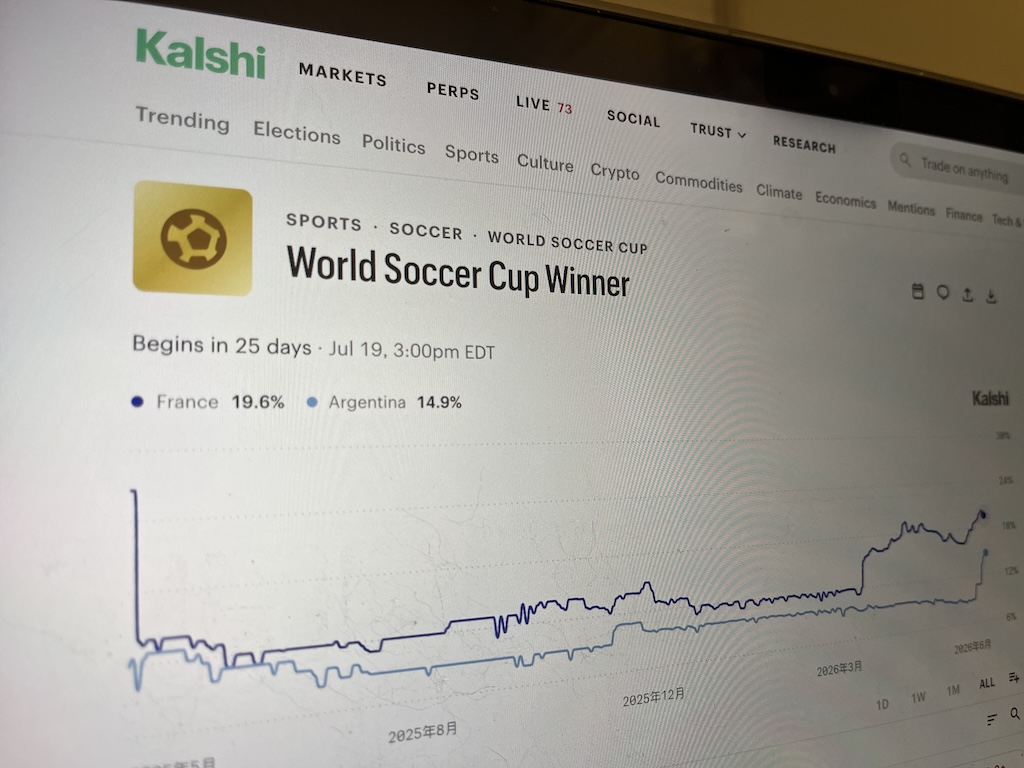
Research examining prediction market platforms has identified a fundamental disconnect between regulatory classification and actual operational function. Kalshi, a leading prediction market platform, now derives 85 percent of its trading volume from sports-related contracts, effectively transforming the platform into a de facto sportsbook despite regulatory structures designed to govern prediction markets as distinct entities. This divergence between intended purpose and actual usage patterns reveals significant gaps in regulatory oversight and raises questions about whether existing frameworks adequately address contemporary market realities.
Prediction markets were conceptually designed to aggregate dispersed information through market mechanisms, enabling participants to express probabilistic beliefs about future events across political, economic, and social domains. Sports betting represented a secondary application. However, the substantial profitability and user engagement associated with sports wagering has driven platform evolution toward sports-centric offerings. Kalshi's 85 percent sports volume concentration demonstrates how market incentives can fundamentally reshape platform function, regardless of original regulatory intent. This shift reflects broader patterns where financial incentives drive platforms toward activities generating highest user engagement and transaction volume.
The regulatory lag creates several operational and compliance challenges. Sportsbooks operate under distinct regulatory frameworks emphasizing responsible gambling protections, integrity monitoring, and consumer safeguards specifically calibrated to sports betting contexts. Prediction market regulations, by contrast, often emphasize information aggregation and market efficiency without equivalent sports-betting-specific protections. Platforms operating as de facto sportsbooks under prediction market licenses may lack adequate responsible gambling infrastructure, integrity monitoring systems, or consumer protections that traditional sportsbooks maintain. This creates potential consumer protection gaps and regulatory arbitrage opportunities.
The research findings carry implications for regulators, platforms, and industry participants. Regulators face pressure to either reclassify prediction market platforms that function primarily as sportsbooks or extend sports-betting-specific regulations to prediction market contexts. Platforms must evaluate whether existing regulatory licenses adequately support their actual operational scope or whether additional licensing or compliance frameworks are necessary. The broader industry context suggests that as prediction markets mature and consolidate around high-engagement use cases, regulatory frameworks will require corresponding evolution to maintain consumer protection standards and market integrity.
Original report
Asia Gaming Brief
Summary is editorial. Full reporting, images and rights belong to the source.
Get the news by email
A digest of the day's top iGaming stories, straight to your inbox.