Lucchese Family Members Plead Guilty In Illegal Gambling Ring Tied To New Jersey Councilman
The brief
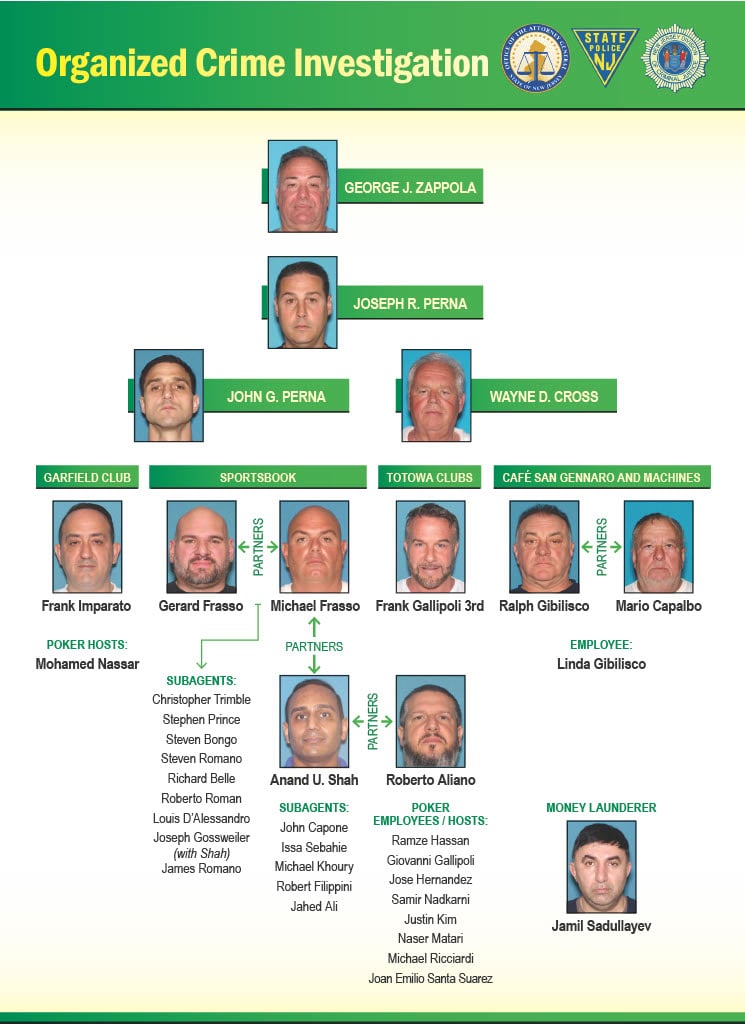
Eight members of the Lucchese organized crime family have pleaded guilty to charges related to operating an extensive illegal gambling network in New Jersey. The criminal enterprise encompassed multiple illegal gaming operations including underground poker games, unlicensed sportsbooks, and gaming rooms, according to charges announced by Attorney General Jennifer Davenport. The case highlights the persistence of organized crime involvement in illegal gambling despite the expansion of legal gaming options across the region.
The involvement of a New Jersey councilman in the conspiracy adds a significant public corruption dimension to the case. When elected officials become entangled with organized crime gambling operations, it undermines municipal governance and suggests systematic corruption of local institutions. The connection between traditional organized crime families and illegal gambling infrastructure remains a persistent law enforcement challenge, particularly in jurisdictions where legal gaming options exist but illegal operations continue to thrive through convenience, credit extension, or avoidance of regulatory scrutiny.
The guilty pleas represent a significant enforcement victory for New Jersey authorities, but they also underscore a fundamental reality: legal gaming markets do not automatically eliminate illegal gambling. Underground operations persist because they offer advantages that regulated casinos cannot provide, including credit-based wagering, lower minimum bets, and freedom from responsible gambling restrictions. Organized crime families have adapted to legal gaming expansion by maintaining illegal operations that serve market segments underserved by licensed operators.
The case demonstrates that law enforcement agencies must maintain robust resources dedicated to combating illegal gambling infrastructure even as legal markets mature. The Lucchese family's continued involvement in gambling operations decades after the expansion of Atlantic City casinos and subsequent New Jersey gaming liberalization shows that organized crime remains embedded in underground gaming networks.
For regulators and policymakers, the prosecution underscores the importance of comprehensive enforcement strategies that address both supply-side illegal operations and demand-side consumer behavior. While legal gaming expansion reduces some illegal gambling activity, it does not eliminate it entirely, requiring sustained law enforcement attention and coordination between federal, state, and local authorities to disrupt organized crime involvement in gaming.
Original report
CasinoBeats
Summary is editorial. Full reporting, images and rights belong to the source.
Get the news by email
A digest of the day's top iGaming stories, straight to your inbox.