Bank of England eyes rails for stablecoins, digital pound
The brief
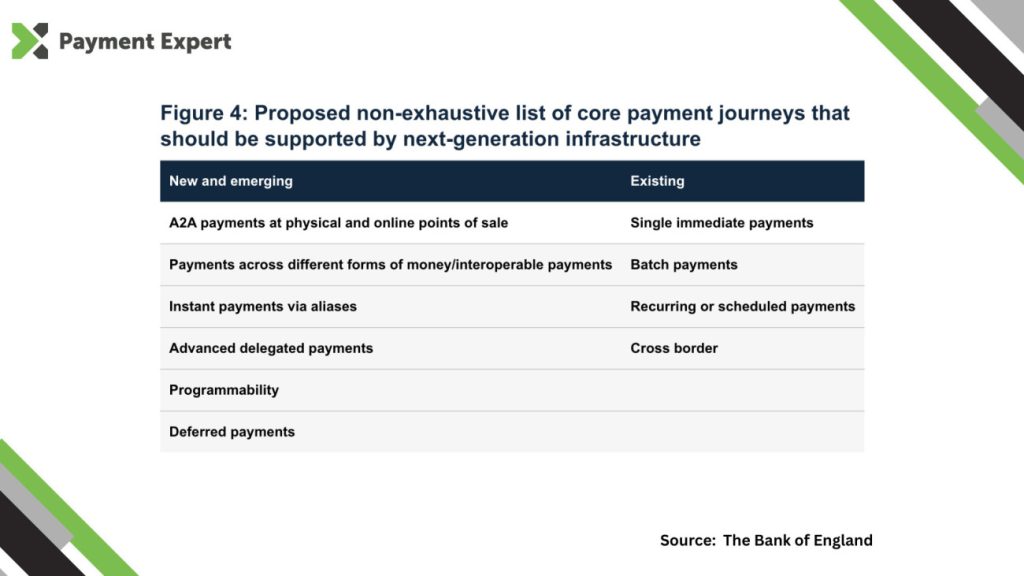
The Bank of England's Retail Payments Infrastructure Board (RPIB) has released a consultation detailing proposed payment rails designed to accommodate regulated stablecoins, a potential central bank digital currency (CBDC) in the form of a digital pound, and conventional bank deposits. The framework envisions account-to-account transactions at the point of sale as a key new payment journey, signaling a fundamental shift in how the UK's payment ecosystem may evolve.
The consultation reflects broader central bank interest in modernizing payment infrastructure to address emerging technologies and changing consumer preferences. By explicitly including stablecoins within the proposed rails, the RPIB acknowledges the growing role of digital assets in retail payments while maintaining regulatory oversight. This approach differs from some jurisdictions that have taken a more restrictive stance toward stablecoins, instead positioning the UK as a jurisdiction open to innovation within a supervised framework.
The inclusion of a potential digital pound indicates the Bank of England's contingency planning for a CBDC. While a digital pound remains speculative, the infrastructure consultation suggests the central bank is preparing the technical and regulatory groundwork should policymakers decide to proceed. This forward-looking approach allows the UK to avoid infrastructure lock-in and ensures that any future CBDC would integrate seamlessly with existing payment systems and emerging technologies like stablecoins.
For the iGaming sector, these developments carry indirect but meaningful implications. Payment infrastructure modernization affects how operators and players conduct transactions, particularly in jurisdictions where stablecoins or CBDCs might eventually become accepted settlement methods. Operators already exploring blockchain-based payments or considering stablecoin integration may find the UK's regulatory clarity advantageous. Additionally, improved account-to-account payment rails could reduce friction in deposit and withdrawal processes, benefiting both operators and players.
The RPIB consultation represents a critical juncture in UK financial infrastructure policy. By mapping rails that accommodate multiple payment types—traditional, digital, and potentially decentralized—the Bank of England is positioning the UK to remain competitive in global fintech innovation while maintaining central bank oversight. The eventual implementation of these frameworks could serve as a model for other jurisdictions and reshape how payments, including those in regulated iGaming, are processed across the economy.
Original report
Payment Expert
Summary is editorial. Full reporting, images and rights belong to the source.
Get the news by email
A digest of the day's top iGaming stories, straight to your inbox.