Special report: A timeline of how Brazil built its igaming regulatory framework
The brief
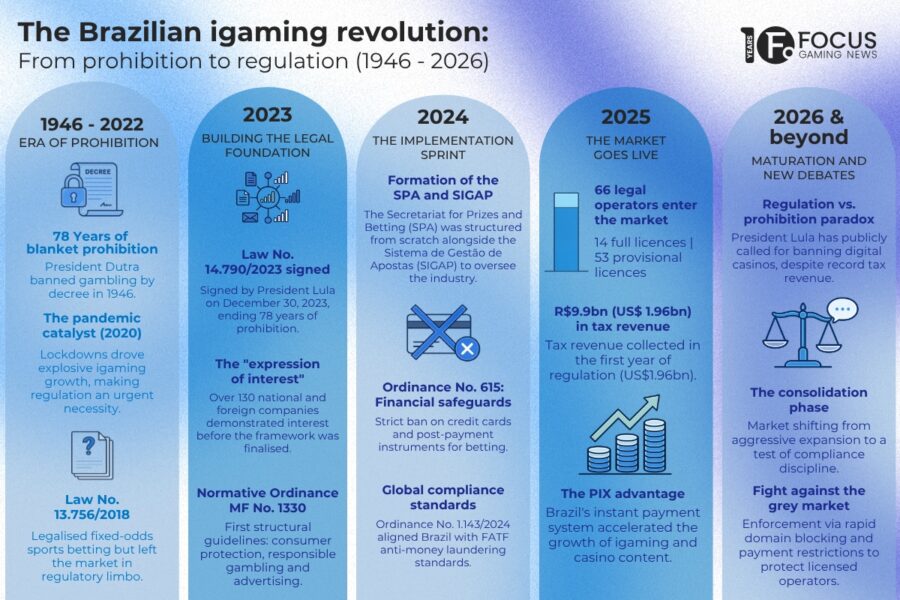
Brazil's legalization of internet gaming represents a watershed moment for Latin America's most populous nation and largest economy. On December 30, 2023, President Luiz Inácio Lula da Silva signed Law No. 14.790/2023, formally dismantling nearly eight decades of blanket prohibition on gambling activities. The legislation did not emerge overnight; rather, it culminated from sustained legislative effort and evolving political consensus around the potential economic and regulatory benefits of a controlled igaming market.
The path to legalization reflects broader regional trends in which Latin American jurisdictions have increasingly recognized that prohibition drives activity underground rather than eliminating it. By establishing a regulated framework, Brazil aims to capture tax revenue, create consumer protections, and combat unlicensed operators who have long dominated the market. The timing also aligns with growing international pressure on major economies to modernize gaming laws and integrate digital-native players into formal regulatory structures.
For the iGaming industry, Brazil's opening represents one of the most significant market opportunities in the Western Hemisphere. With over 215 million inhabitants and a substantial middle class with internet access, the country offers operators scale comparable to major European markets. However, the regulatory architecture—still being detailed through implementing regulations—will determine how quickly operators can enter and whether the framework remains attractive relative to competing jurisdictions.
The legislative shift carries implications beyond Brazil itself. As the largest economy in Latin America to formalize igaming regulation, Brazil may influence regulatory approaches across the region, potentially accelerating similar reforms in neighboring countries. For existing operators already active in Brazil's gray market, legalization offers both opportunity and risk: the chance to legitimize operations against the threat of enforcement action, but also the prospect of competing in a newly transparent, licensed environment with established compliance costs.
The coming months will be critical as implementing regulations take shape, defining licensing criteria, tax rates, player protections, and responsible gaming requirements. How Brazil's framework develops will serve as a bellwether for the region's regulatory maturation and the industry's ability to balance commercial expansion with consumer safeguards.
Original report
Focus Gaming News
Summary is editorial. Full reporting, images and rights belong to the source.
Get the news by email
A digest of the day's top iGaming stories, straight to your inbox.